
Cache County News Is Not Bookings
Different sources play different roles here. A local story covers an investigation, a police response, a hearing, or a sentence. The sheriff's dispatch blotter lists incidents handled by dispatch. Neither one works as a live bookings feed. The jail labels its Arrest & Booking product as a last-30-days view, and its current-inmate and booking tabs have been unavailable to the public. Keep story dates, dispatch entries, and booking dates separate, because they rarely describe the same event. For a live custody question, go to the Cache County Jail Division and its booked-inmates information. When the online tabs give no result, its status line is the right fallback. The county record and feed page collects the broader roster and feed details, including which public tabs are down. A story can name an agency or event. It still cannot tell you whether someone sits in a cell tonight. Note: A dispatch incident may lead to no arrest, and coverage of an arrest can shift as a case moves through court.
Cache County Media and Booking Coverage
Think of Cache Valley information in tiers. The sheriff's channel comes first, since it is the official incident source. Editorial outlets come next; they publish reporting, not county booking lists. Two commercial third-party sections sit last on that list, and for good reason. Their entries can be stale, duplicated, wrong, or quietly removed. They should never be your answer on custody, charges, or a court outcome.
| Outlet | Coverage | Photos? | Where |
|---|---|---|---|
| Cache County Sheriff's Office | Dispatch incidents, not a booking or arrest feed | No confirmed booking-photo feed | Dispatch blotter |
| The Herald Journal | Rolling Crime & Courts reporting across Cache Valley | Case-specific editorial images | Crime & Courts |
| Cache Valley Daily | Rolling local news, including verified Logan and Smithfield stories | Editorial presentation, no verified standing mugshot practice | Local News |
| FOX 13 Utah | Regional major-news coverage through a Cache County tag | Case-specific images or video | Cache County tag |
| KVNU / Cache Valley radio | Local-news route was blocked during review, so crime coverage is unverified | Unverified | No verified Cache crime section |
| RecentlyBooked | Unofficial Cache County category, not an official feed | Its page said Cache County does not provide mugshot images | Cache County page |
| Mugshots.com | Unofficial Cache County archive-like category, not a recent-bookings source | Booking-oriented labels, with no published official-source or refresh detail | Cache County category |
The Cache Valley Daily Local News hub is a solid example of rolling local coverage. It can surface an event and name the agency involved. Fresh does not mean official, though. A recent story is still just a story.
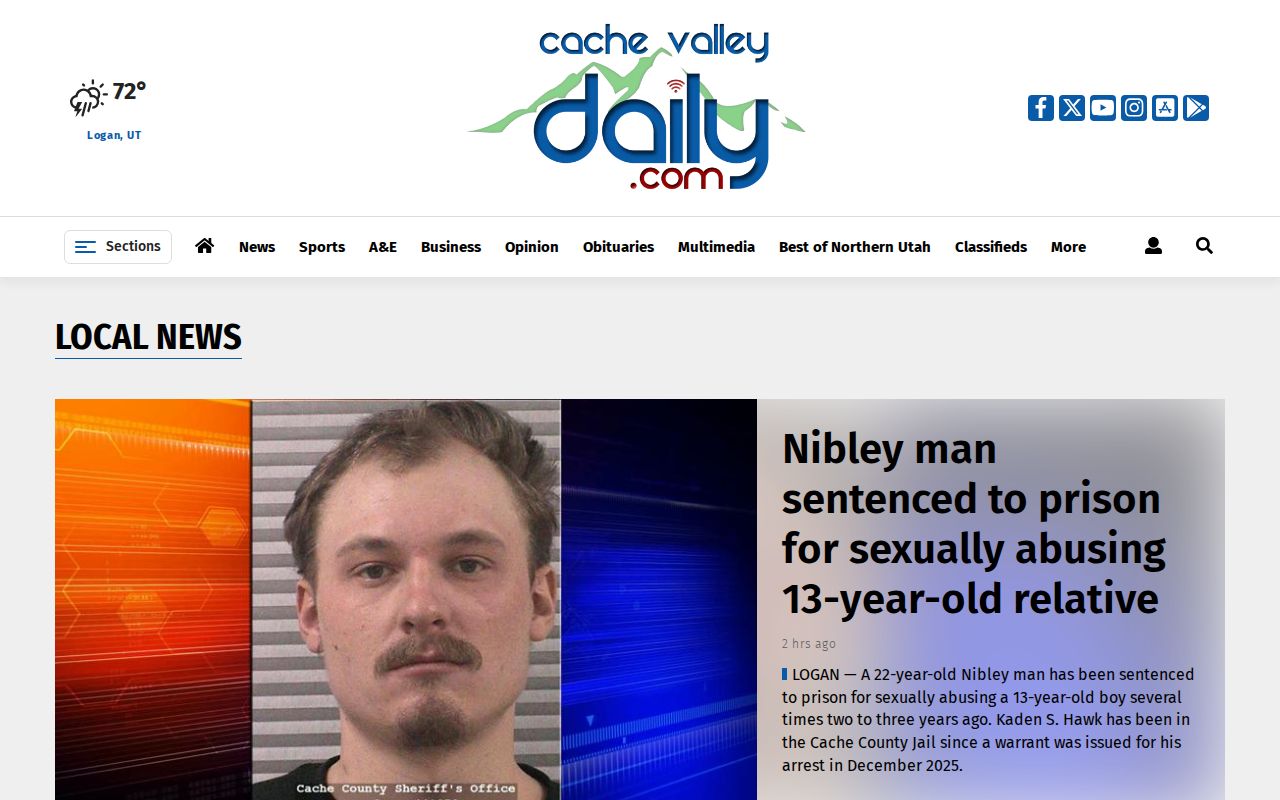
Pull the date, place, and agency name from an article and use those as your starting details for an official follow-up. The source offers no countywide arrest list and no court index. It is a first step only.
Cache County Dispatch Incident Records
The sheriff calls its official log a dispatch blotter, and that wording counts. It can place an incident in time or flag a dispatch matter. What it cannot do is act as a daily arrest log. There is no confirmed lookback window, no named-person booking fields, no booking-photo practice, and no known archive retention. So do not assume every entry ended with someone booked into jail. The official Cache County incidents blotter appears below. If it points to a sheriff event, take your next question to the jail or the agency records process. The blotter itself goes only so far.
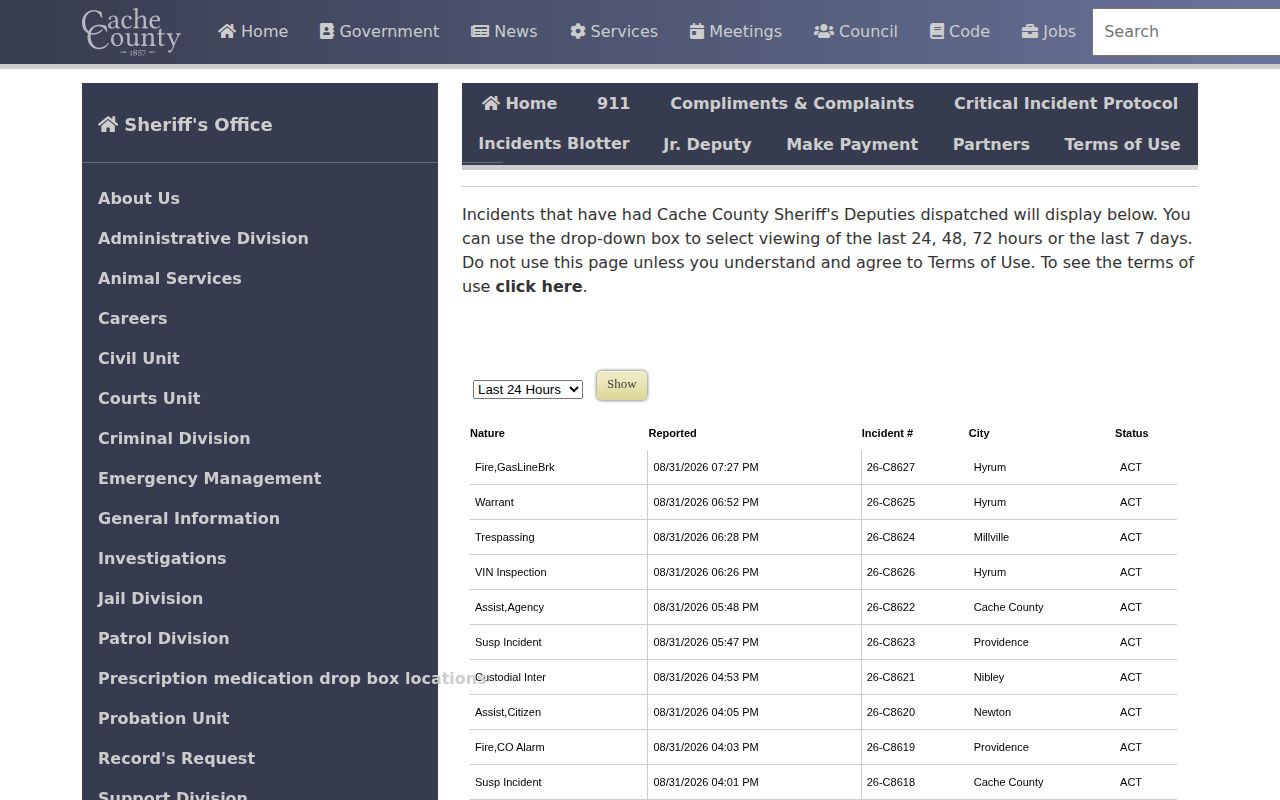
Because the blotter tracks incidents, it works as a lead rather than an answer. The same goes for editorial reporting. Neither can confirm a booking, current custody, or how a case ended in court.
Cache County News Images Need Context
No local paper or TV station here keeps a standing mugshot gallery. The Herald Journal's Crime & Courts section runs article-specific editorial images, not a jail roster. Cache Valley Daily and FOX 13 do the same. They attach visuals to single stories or video reports. A picture may illustrate a report. That is all it does. Cache County Jail says it may no longer distribute booking photos after May 5, 2021. That policy explains why a local story cannot be counted on to include or verify a booking image. It also says nothing about how a newsroom got any particular visual. For the underlying facts, trust the agency named in the story and the court file. The Herald Journal Crime & Courts page is the strongest dedicated local vertical around. Its RSS sorts newest-first and returns up to 50 entries. Even so, every item still needs the same official follow-up.
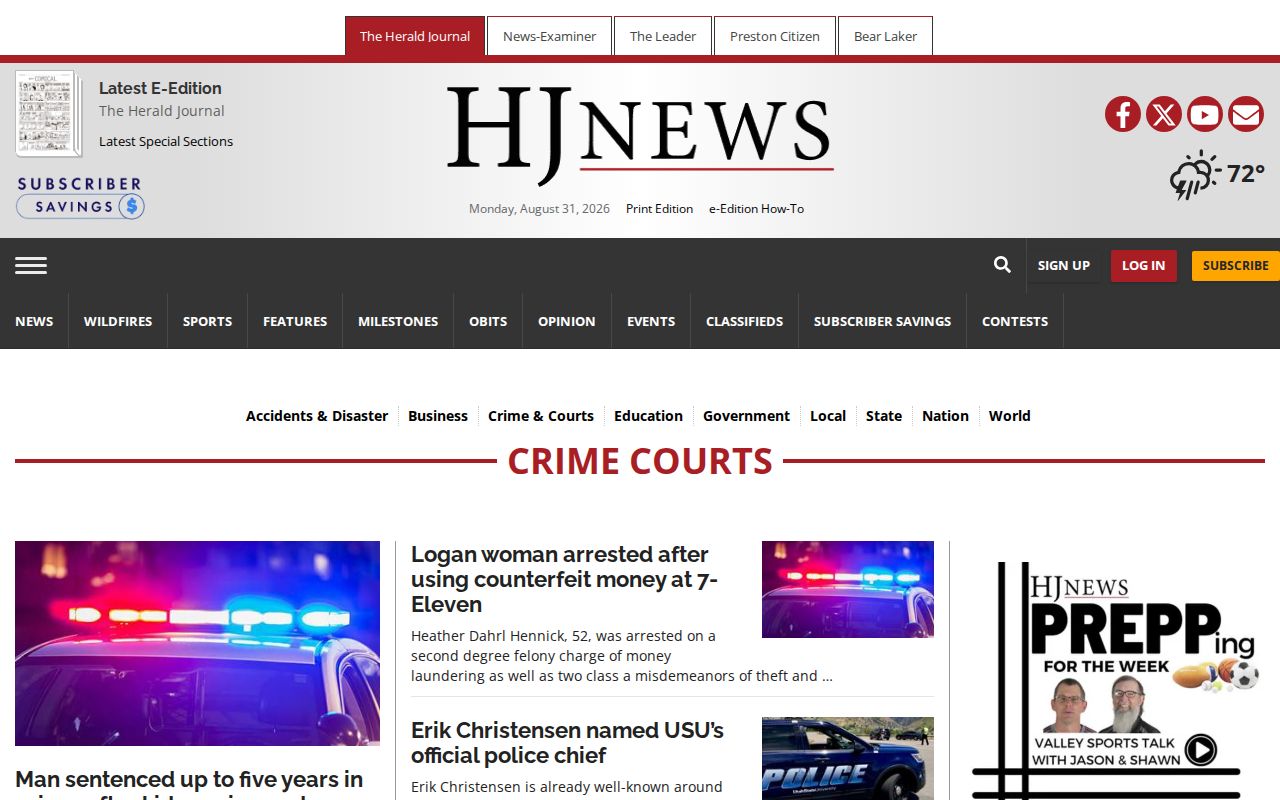
For a live look at that stream, the Herald Journal Crime & Courts RSS feed lists its available entries newest first. Note: A newsroom image and a county booking image serve different purposes and are not interchangeable records.
From Cache County Story to Records
Start with what the story gives you. Jot down the incident date, the arresting agency, the location, the exact spelling of the name, and any case number listed. Those details anchor everything that follows. From there, work through the official systems one at a time rather than skipping around. A late article is not proof that someone sits in jail right now, so let the jail roster answer custody questions and let the court docket answer questions about outcomes.
- Identify the agency and event. A Herald Journal, Cache Valley Daily, or FOX 13 story can name the agency to contact and narrow the date or location.
- Check the county custody route when it is relevant. The Cache County Jail's public booking and current-inmate tabs were unavailable at review, so use the booked-inmates information route for an immediate status question rather than assuming a missing web result means release.
- Request the releasable agency record. For a historic sheriff or jail record, submit the Cache County Sheriff's records request form with the best available name, date, incident number, or case number. The arresting municipal agency may hold its own incident report.
- Find the court case and its result. Use Utah Courts Xchange for public case information, or MyCase when its party-facing access applies. Review the docket and disposition rather than stopping at an early report.
Cache County Booking Cases End in Court
Booking records end at the jail door. Court information travels a separate track. Cache County falls under Utah's First Judicial District. Which court handles a case depends on the level of the charge. A docket can show the filing, arraignment dates, hearings, amendments, a plea, judgment, sentence, or dismissal. The First Judicial District is the local starting point, while Xchange and MyCase serve as the public search routes. Some matters stay sealed, restricted, pending, or filed at another court level. A search that returns nothing does not mean an arrest never happened. Where court records open up, they are the right place to end the trail.
Cache County Aggregator Pages Are Secondary
Two commercial county pages exist for Cache. They are RecentlyBooked and Mugshots.com. Treat both as backups to the sheriff, jail, agency, and court routes. RecentlyBooked reports no Cache arrests or mugshots in the past 30 days, and it notes that the county does not release booking photos. Mugshots.com carries a Cache County archive category with roughly 21,000 entries. It names no source agency and posts no refresh schedule. BustedNewspaper and Mugshots.zone offer no verified Cache County section. Arrests.org Cache coverage also remains unconfirmed. A Logan event may have a different record holder than a countywide page would suggest. The Logan Busted Mugshots page maps the city police and local record path. Across the county, let a third-party listing spark an official check. Then turn to the responsible agency and the court docket for facts that count.